Sponsored
Clever Ads/Vertice Ads Under Fire Over Exploitation of Nigerian Publishers


The growing concerns surrounding these media brands; Clever Ads and Vertice Ads have raised serious questions about transparency, accountability and business ethics in the digital advertising industry.
Nigerian publishers who partnered with these advertising companies to monetise their websites are expressing frustration over alleged unpaid earnings, delayed payments and explanations that have failed to resolve their complaints.
For publishers, the situation goes beyond ordinary payment delays. It raises a fundamental question about the integrity of an advertising business model that allows companies to display advertisements on publishers’ websites, generate revenue from advertisers and allegedly fail to release the publishers’ agreed share of the earnings.
If these allegations are established, such practices would represent a serious breach of business trust and could amount to the exploitation of independent publishers.
Clever Ads and Vertice Ads must explain why publishers who have provided advertising space and generated earnings are still struggling to receive their money.
An Advertising Business Model That Raises Serious Questions
The arrangement between advertising networks and publishers is straightforward. Publishers provide website traffic and advertising space, while advertising companies connect those platforms with advertisers and share the resulting revenue according to agreed terms.
Both parties are expected to benefit.
However, complaints attributed to publishers working with Clever Ads and Vertice Ads paint a troubling picture of this relationship.
Publishers reportedly register their websites, integrate advertising codes, display advertisements and generate revenue through their platforms. Their websites become part of the advertising networks’ inventory, helping these companies serve advertisements and generate business.
But when it comes to receiving their earnings, some publishers allege that the relationship suddenly becomes complicated.
Instead of receiving their money according to the agreed payment terms, they reportedly encounter payment delays, account reviews and explanations that do not adequately address their concerns.
This is unacceptable.
An advertising company cannot reasonably expect publishers to continuously provide advertising inventory and generate business opportunities while treating payment obligations as though they are optional.
Are Publishers Being Used to Generate Revenue Without Being Paid?
This is one of the most troubling questions emerging from the complaints.
Publishers invest their own resources to build websites, attract visitors, produce content and maintain the platforms on which advertisements appear.
These are not free services.
Behind every website are expenses, including domain registration, hosting, writers, editors, SEO tools, maintenance and digital marketing.
When publishers agree to work with an advertising network, they do so with the expectation that legitimate earnings will be paid under the agreed terms.
If an advertising company continues benefiting from publishers’ advertising inventory while withholding legitimate earnings without sufficient justification, it raises serious concerns about whether publishers are being exploited.
It is particularly disturbing when publishers claim that their dashboards show accumulated earnings, yet their requests for payment are met with repeated explanations rather than actual payment.
Displaying advertisements and generating revenue is not a favour publishers are doing for advertising companies. It is a commercial service for which they are entitled to agreed compensation.
The Endless Excuses Over Publishers’ Earnings Must Stop
Advertising networks have a responsibility to protect advertisers against invalid traffic and fraudulent activity. Nobody disputes that.
However, traffic quality policies should not become convenient excuses for avoiding legitimate payment obligations.
If Clever Ads or Vertice Ads believes that a publisher has violated its advertising policies, the company should provide specific evidence, specifically state the relevant policy and explain the basis for withholding payment.
A vague reference to suspicious traffic, an ongoing investigation or an account review is not enough to settle a legitimate payment dispute.
Publishers deserve answers, not endless uncertainty.
If earnings are invalid, explain exactly why. If an account has violated the rules, identify the violation. If payment has been approved, release it.
An advertising company that cannot provide transparent explanations for withheld earnings should expect serious questions about its credibility.
Nigerian Publishers Are Not Second-Class Business Partners
There is no justification for treating Nigerian publishers as though their businesses and financial interests matter less than those of publishers in other countries.
Nigerian digital publishers operate legitimate media platforms that attract readers, generate advertising impressions and create commercial opportunities.
They invest in their businesses and compete in an increasingly demanding digital publishing industry.
If Clever Ads and Vertice Ads are willing to accept Nigerian websites into their advertising networks, they must also be willing to honour their financial obligations to those publishers.
They cannot selectively enjoy the benefits of international publisher participation while leaving Nigerian partners struggling to collect their earnings.
The fact that a publisher operates from Nigeria does not make its advertising inventory less valuable or its payment rights less important.
Withholding Legitimate Earnings Can Destroy Small Publishing Businesses
The consequences of unpaid advertising revenue can be devastating for independent publishers.
Many small publishers depend on advertising income to keep their businesses operational. Their earnings are used to pay writers, renew hosting subscriptions, purchase digital tools and invest in producing more content.
When payments are withheld, the publisher carries the financial burden alone.
The advertising company may continue operating its network, but the publisher is left dealing with unpaid expenses and uncertainty.
This is why payment accountability must be taken seriously.
Publishers should not be expected to finance the operations of advertising companies through unpaid services and accumulated earnings that they cannot access.
If these allegations are substantiated, the companies’ conduct deserves serious scrutiny from relevant industry stakeholders and appropriate regulatory authorities.
Immediate Action Required From Clever Ads and Vertice Ads
The time for vague explanations and unanswered payment complaints should be over.
Clever Ads and Vertice Ads must address the concerns raised by affected publishers and take the following actions:
- Release outstanding legitimate payments immediately: Publishers who have satisfied the agreed payment requirements should receive their money without further unnecessary delays.
- Provide transparent explanations for withheld earnings: Any deductions, cancellations or payment restrictions must be supported by specific evidence and the applicable contractual or advertising policy provisions.
- Resolve pending account reviews: Publishers should not remain indefinitely trapped in account reviews without a clear decision or explanation.
- Establish a proper payment dispute process: Publishers must have access to a responsive channel through which they can challenge withheld earnings and receive meaningful resolutions.
- Publish clear payment policies: Payment thresholds, payment dates, traffic-quality requirements and conditions for withholding revenue should be communicated clearly.
- Address affected Nigerian publishers directly: The companies should provide an official response to the complaints and explain what steps they are taking to resolve outstanding payment disputes.
These demands are not unreasonable. They are basic expectations in any legitimate commercial relationship.
A Warning to Other Publishers Considering These Advertising Networks
Publishers considering partnerships with Clever Ads or Vertice Ads should exercise due diligence.
Before integrating advertisements, website owners should carefully review the payment terms, traffic policies, revenue-sharing arrangements and conditions under which earnings can be withheld or cancelled.
They should also keep records of their earnings, impressions, correspondence and payment requests.
The experiences being reported by affected publishers should serve as a reminder that an attractive advertising revenue dashboard does not automatically guarantee a reliable payment relationship.
Publishers must be able to trust the companies they allow to monetise their websites.
That trust must be supported by transparent policies and consistent payment practices.
Final Demand: Pay Publishers What They Have Rightfully Earned
Clever Ads and Vertice Ads must understand that publishers are business partners, not free sources of advertising inventory.
They provide the websites, content, audience and advertising space that make these commercial relationships possible. They deserve to receive the agreed share of legitimate advertising revenue.
The allegations of unpaid earnings and unsatisfactory payment explanations deserve immediate attention. Remaining silent or responding with generic excuses will only deepen publishers’ concerns and further damage confidence in the companies.
If the companies believe that publishers’ complaints are unfounded, they should demonstrate this through transparent records, clear explanations and evidence of compliance with their payment obligations.
Our demand is simple: Stop withholding legitimate publisher earnings, resolve outstanding payment disputes and pay every affected publisher what is contractually due.
Nigerian publishers deserve accountability. The digital advertising industry must not become an environment where companies can benefit from publishers’ hard work while those publishers struggle to receive the money they have earned.
It is time for Clever Ads and Vertice Ads to answer these allegations and take concrete action.
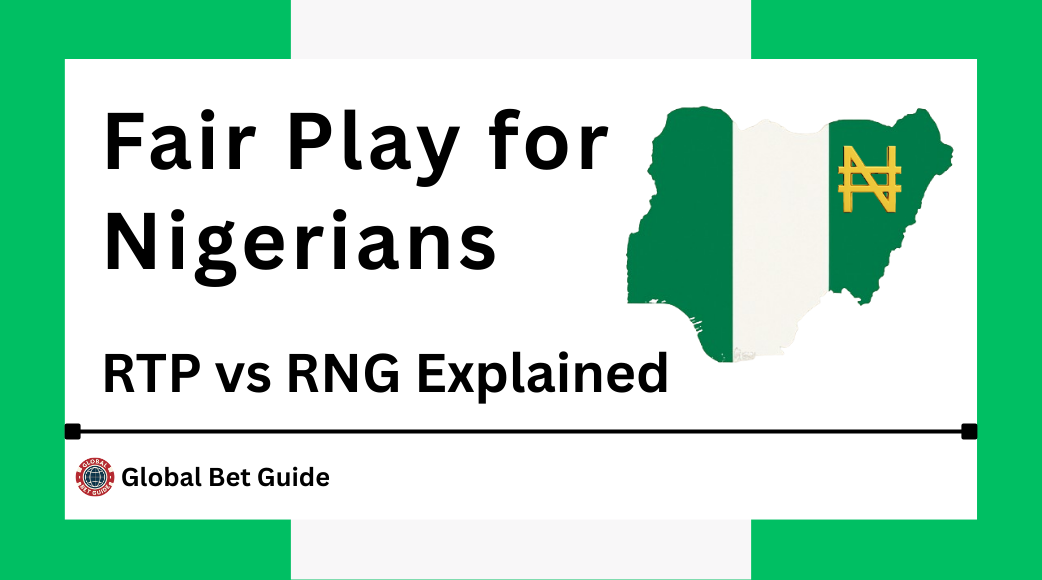
When Nigerians talk about fairness in betting, they often mean two things: whether the odds are transparent and whether the games themselves are trustworthy. Beyond flashy bonuses or quick withdrawals, fair play is about knowing that every spin, card, or virtual match follows a consistent, verifiable logic.
What Is RTP and Why Does It Matter?
Return to Player (RTP) is expressed as a percentage. For example, if a slot advertises an RTP of 96%, it means that—over a very long period—the game is designed to return ₦96 for every ₦100 wagered. But there are caveats: RTP is calculated over thousands or millions of spins, not a single session.
What Is RNG and Why Is It Critical?
Random Number Generators (RNGs) are the algorithms that ensure outcomes are unpredictable. Every time you spin a slot reel, draw a card in online blackjack, or place a bet in virtual sports, the RNG decides the result.
👉 For a deeper dive into how virtuals use these systems, check out Virtual Sports Betting in Nigeria:
https://globalbetguide.com/virtual-sports-betting-in-nigeria/
RTP in Practice: Why Blackjack Stands Out
Not all games are created equal. Slots often vary between 88%–96% RTP, while classic table games can offer far higher returns. Take blackjack: with the right strategy, some versions exceed 99% RTP.
👉 To understand how this plays out in detail, see our Nigeria Blackjack Master Guide:
https://globalbetguide.com/blackjack-master-nigeria/
Transparency & Player Protection in Nigeria
In regulated markets, operators must publish RTP values and submit RNGs to third-party testing. Nigeria is moving toward clearer guidelines, but enforcement remains uneven.
Practical Player Checks & Limits
Nigerian bettors don’t need to be data scientists to protect themselves. Simple steps can ensure a safer experience: Check RTP before you play, stick to regulated brands, set limits, and start small.
Why This Matters for Bonuses and Loyalty Programs
Bonuses are often advertised with eye-catching numbers but come with playthrough requirements. Those requirements hinge on game RTP. Low-RTP slots drain balances faster, while high-RTP games stretch bankrolls.
👉 For practical guidance on handling winnings safely, see our guide on How to Withdraw Money from Online Casinos in Nigeria in 2025:
https://globalbetguide.com/casino-winnings-withdraw-for-nigrian-players/
Looking Ahead: The Future of Fair Play in Nigeria
By 2025, conversations around fairness in Nigerian betting are shifting. Regulators are catching up, operators are publishing more data, and players are asking tougher questions.
Conclusion
For Nigerians in 2025, understanding RTP and RNG isn’t just technical trivia—it’s the foundation of informed betting. Fair play begins with knowledge. And in a fast-growing Nigerian market, knowledge is the most valuable bet you can make.
-

 News5 months ago
Oil Revenue Boost Prompts Renewed Optimism as Nigeria Targets Higher Production, Energy Sector Reforms
-

 News5 months ago
Rising Insecurity Sparks National Concern, Government Intensifies Counter-Insurgency Operations
-

 Lifestyle9 months ago
Nollywood Actor Ray Emodi Quits Acting to Pursue New Career
-
 News5 months ago
National Assembly Tightens Oversight on Electoral Reform Bills Ahead of 2027 Elections
-

 Breaking News5 months ago
Iran Closes Strait of Hormuz, Nuclear Talks Collapse Amid Lebanon Escalation
-
 Sponsored5 months ago
Fair Play for Nigerians: RTP vs RNG Explained (2025) + Practical Checks & Limits
-

 Lifestyle9 months ago
Omah Lay Shock Fans by Shaving Off Hair on Instagram Live
-

 News5 months ago
FG Moves to Intensify Security Operations as Kidnapping Surge Nationwide